

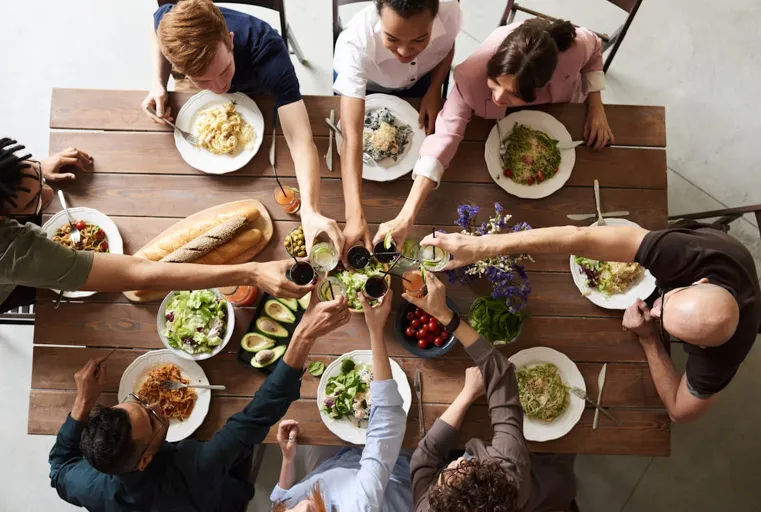
Ever said “just come over for dinner” and immediately regretted it as your group chat lit up with dietary requests, time changes, and vague RSVPs? Hosting a family dinner in today’s world isn’t as simple as throwing meat on the grill and calling it a night. Between shifting work schedules, health trends, and everyone’s evolving idea of what qualifies as food, planning one shared meal can feel like navigating a moving target. Pairing the evening with a good bottle of wine Singapore style—whether local selections or imported favorites—can add warmth and sophistication to the table. In this blog, we will share how to host a family dinner without losing your cool.
Start With Food That Doesn’t Compete for Attention
In a time when everyone seems to have a favorite eating plan—low carb, dairy-free, flexitarian, “just doing gluten-light”—choosing the right menu isn’t just about flavor anymore. It’s about striking a balance between comfort, simplicity, and something that won’t start a debate. Overcomplicating the food is the fastest route to stress. You don’t need a five-course production. You need three things: ease, variety, and dishes that don’t fall apart if dinner runs 20 minutes late.
One reliable strategy is starting with a handful of flexible sides that carry both taste and ease. Something like steamed green beans works well because it hits the sweet spot between fresh, fast, and friendly to most diets. They hold up if dinner is slightly delayed, they’re easy to make in large batches, and you don’t need a culinary degree to keep them from going mushy. Drizzle them with olive oil or toss with garlic if you want to dress them up, but they do their job quietly and effectively. You’re not looking for side dishes that demand compliments—you’re looking for food that gives you margin to focus elsewhere.
The goal isn’t to impress your family with culinary flair. It’s to feed everyone without having to hover over the stove while trying to carry a conversation. You want food that gives you back time, not food that keeps you chained to the kitchen.
Clarify What You’re Not Doing
A lot of dinner stress comes from an unspoken assumption: that a host must make everything from scratch, set a themed table, and somehow play both cook and therapist to an entire family dynamic. That expectation doesn’t come from your relatives. It comes from social media, where dinners look like staged magazine shoots and hosts are always glowing with inner peace. Those aren’t dinners. Those are performances.
Before you even plan the menu, set some quiet boundaries for yourself. You are not running a restaurant. You are not required to fill every minute of the evening with structure. You are not required to entertain people who have known each other since the ’80s. You are not required to solve interpersonal tension with a dessert spread. You are hosting a dinner, not an intervention.
Once you let go of overproduction, the night opens up. You focus on the flow instead of the optics. You prep what you can early. You leave room for the unexpected. That’s what smooth looks like—less like control, more like momentum.
Focus on Flow, Not Perfection
Dinner doesn’t need a strict timeline, but it does need a rhythm. People want to know when to show up, where to put their coats, and whether they should be hungry when they arrive. Give them those answers early. Send one short message with the time, parking details, and whether you’re eating indoors or outside. That removes at least five conversations before they happen.
As for the actual dinner, think of it in blocks. Drinks and casual chatter. The main meal. Some kind of slow unwind. If it’s a group that tends to stay long, have something soft planned for after the meal. Nothing elaborate—a game, a shared playlist, even a simple shared story prompt can shift energy when it starts to dip. You don’t need full structure, but you do need signposts.
Avoid the pressure of overfilling the schedule. Family doesn’t need back-to-back activities. They need moments that breathe. If you create room for people to linger, talk, and step in or out without pressure, the night finds its own rhythm.
Make Space for Different Kinds of Connection
Not everyone at the table will be in the same mood. Some relatives show up to catch up. Others show up out of habit. Some want to talk politics. Others want to talk about their new dog. And some would rather be anywhere else but are too polite to say it. That’s the dinner table mix. It’s never one vibe. It’s always a swirl.
So don’t try to force one shared conversation. Instead, create small ways for different types of connection to happen. Set up multiple sitting areas, even if they’re close together. Keep drinks or snacks away from the main food zone to encourage movement. Create natural pauses—refill opportunities, plate-clearing moments—so people can drift in and out of talks without awkwardness.
Your job isn’t to make everyone connect. It’s to remove the friction that keeps them from doing it on their own.
Build in Recovery Time
Dinner ends. But hosting doesn’t. The cleanup comes next, and this is where your earlier planning pays off. Disposable plates may not be classy, but they reduce tension. Pre-soaking pans while people are still talking feels odd, but it saves you an hour later. The less you leave for the next morning, the better your memory of the night will be.
Don’t be shy about asking for help. Even a quick “Hey, can you stack those plates?” resets the room and lets people contribute without formal direction. It shifts the tone from host-and-guests to shared space. Most people want to help—they just don’t want to guess how.
Once cleanup winds down, build in 30 minutes for yourself. No news, no emails, no late-night scrolling. Just a chance to let your brain reenter its own pace. Hosting draws energy from you even if the night goes perfectly. That recovery time protects the part of you that made the night work in the first place.
Think About What It Means to Host
In a world that’s gotten used to remote everything—work, holidays, even birthdays—there’s something quietly powerful about inviting people into your space. Hosting is personal. It’s also a little rebellious. It says, “This matters. You matter.” Not because of what’s on the table, but because of who’s sitting around it.
We’re in a moment where shared time is harder to come by. Schedules collide. Devices interrupt. Attention spans shrink. But when you host a dinner, you push back against that tide. You create a setting where people slow down, sit still, and speak face to face. It might be messy. It might be loud. But it’s real.
And that’s the point. Not to impress. Not to perform. But to gather—imperfectly, sincerely, and on purpose.