

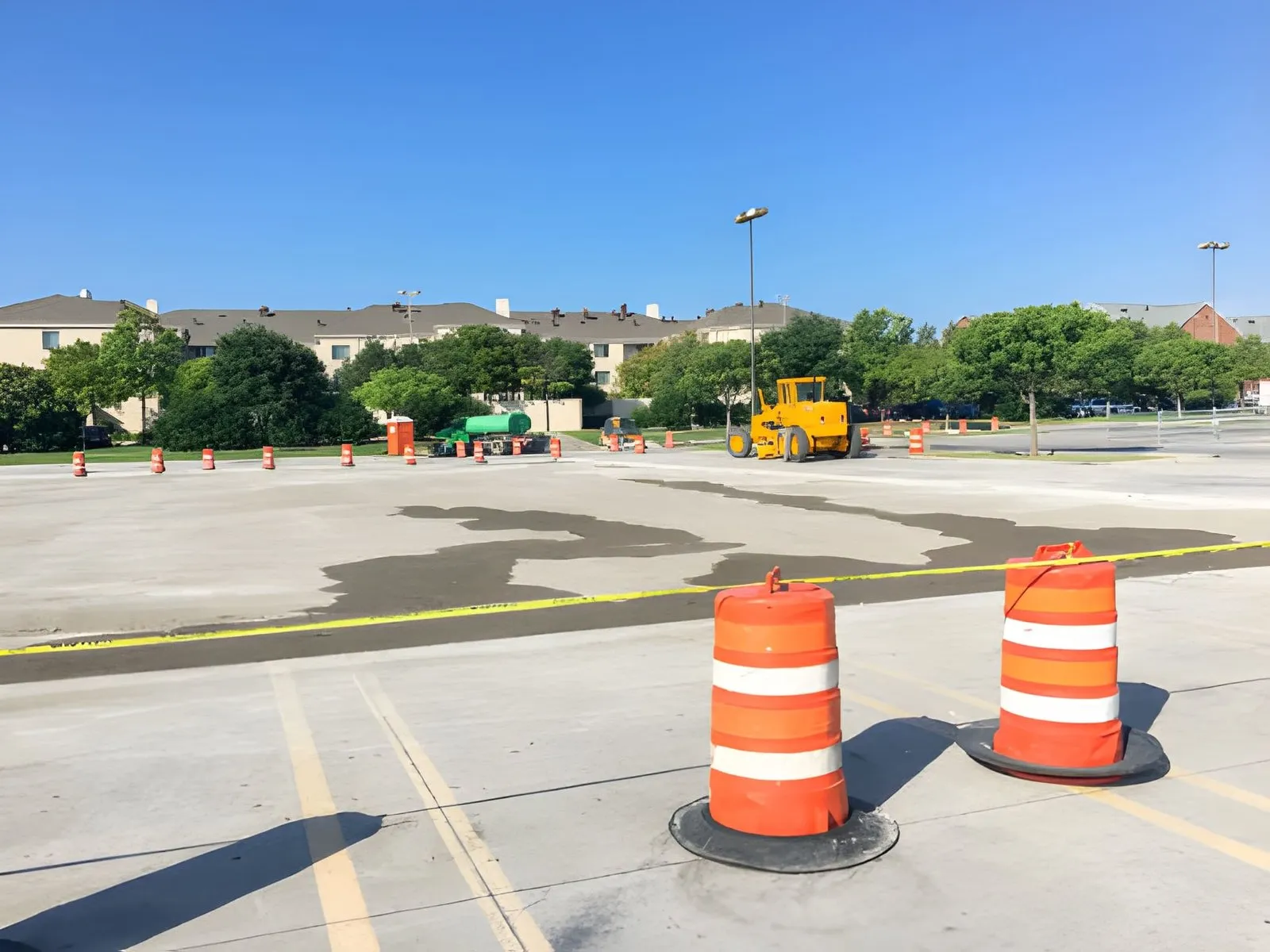
Sixty five tons of concrete and asphalt came off a commercial parking lot in El Cajon, and roughly half of it left the site coded as mixed debris instead of clean recyclable material. We were the cutting and flatwork sub on that teardown, saw cutting and breaking out a lot that had been patched twice since 1998. The slab was good material. Then cut rebar, plastic banding and lunch trash went into the same box, and a load that should have been weighed as clean concrete got handled as general construction debris. The second half of the job ran through a hauler set up for the kind of construction recycling san diego ca contractors can actually use, meaning separate boxes for concrete, asphalt, metal and wood. Same tonnage, sorted differently, and the disposal line dropped, because what a load costs is decided by what got mixed into it rather than by the dump rate you were quoted.
Mixed Rebar And Trash Sank Our Clean Load Rate
Clean concrete earns one rate at a recycling facility. Add rebar ends, banding, a few coffee cups and a scrap of painted trim, and the identical box gets processed as mixed debris at a worse number. Job after job, the contamination is not the demolition itself; it is the ten minutes at lunch when the open box is the nearest thing on site to a trash can. We watched that happen on the El Cajon lot, where three of the first five boxes had enough non concrete material riding along to lose the clean rate before the driver ever hooked up.
Dust Control Came First On Every Cut
Dry cutting concrete and asphalt throws respirable crystalline silica, the fraction fine enough to reach deep lung tissue. Put the saw on water or wear rated respiratory protection. Not sometimes. NIOSH and OSHA warn in their hazard alert that some engineered stone products run up to 95 percent crystalline silica by weight, which is why cutting, grinding or prepping those materials requires strict dust control and respiratory protection rather than a judgment call. Concrete and asphalt sit well below that share, and they still deserve the same discipline on a long cutting day. Keep bystanders clear of the plume, and keep the plume off the boxes, since slurry and fines settling into a clean concrete load help nobody.
Enforcement is not theoretical either. An April 2026 Buildermuse report on silica rules described OSHA citing a Phoenix concrete cutting contractor $487,000 after inspectors found twelve workers running masonry saws with no dust controls, no respiratory protection and no exposure monitoring. How any of that lands in California is a question for your safety officer and the local enforcement agency, because the specifics vary by state and by jurisdiction.
Separating Concrete From Asphalt Changed The Invoice
Concrete and asphalt are both heavy, both recyclable, and they do not go to the same place. Asphalt goes back into hot mix. Concrete gets crushed into base rock. Mixed in one box they are neither, so the facility prices the whole thing down to whatever the dirtiest fraction deserves. On the back half of the lot we ran two low boys, and a low boy in hauler language is simply a squat open container built to take weight instead of volume, so a full box of slab does not put the truck over legal axle weight. One took concrete, the other took the asphalt cap, and a small pile by the fence took steel.
The arithmetic on a 65-ton lot is not complicated. Call it 40 tons of concrete and 25 tons of asphalt, moved one low boy at a time, with maybe 600 pounds of cut rebar and banding pulled out along the way. That steel got weighed and credited back against the bill rather than charged to us as freight on trash. A sorted load is worth more than the same material in one box. Sorting cost us close to an hour of labor per box, mostly absorbed during cure time when nobody was cutting anyway.
San Diego County jurisdictions keep their own construction and demolition diversion paperwork, and the material a facility writes on the ticket is what ends up in that filing. That is the part of this I care about most, because a mixed debris ticket earns nothing in a diversion report even when nearly all of it was clean slab. So ask a hauler where the concrete physically goes, what contamination limits the receiving facility applies, and whether the ticket will name the material by type. The scale ticket tells on you either way. Painted, varnished or treated lumber and household style trash are the usual reasons a box gets downgraded, and that list is exactly what our hauler handed us before the first delivery.
Clean Loads Earn Back The Sorting Hour
Two invoices for one teardown, and the difference was mostly where the rebar ended up. Treating construction recycling san diego ca sites as a sorting task rather than a hauling task is what moved our disposal line, and an hour of labor per box beats a downgraded ticket every time. Order enough boxes to keep the streams apart, water the saw, and let the metal credit pay for part of the day. The material was always recyclable. Whether it got counted that way was on us.