

You might be feeling a little uneasy right now. Maybe a dentist in Brentwood recently mentioned X rays, 3D scans, or “imaging” and you nodded along, even though your mind was racing with questions. You want to protect your health, you want to avoid pain and surprise costs, and you also want to be smart about radiation and long term risks.end
Because of this tension, you might wonder if all these images are really necessary, or if they are just “extras” added to the bill. You are not alone. Many people feel confused and a bit anxious when they hear they need more than a simple exam.
Here is the short version. Modern general dentistry uses imaging tools like X rays and 3D scans to see what the eye cannot see. That hidden view helps your dentist plan safer, more accurate, and more conservative treatments. When used wisely and according to guidelines from groups like the American Dental Association and the FDA, imaging gives your dentist a clear map so you are less likely to face painful surprises later.
Why does your dentist need imaging if they already looked in your mouth?
It can feel frustrating. You sit in the chair, the dentist looks carefully with a mirror and bright light, you expect an answer, yet they say, “We need some X rays.” You might think, “You just looked. Why is that not enough?”
The truth is that much of dentistry happens in places that are hidden. Cavities can form between teeth where they touch. Infections can develop at the tip of a root, deep in the bone. Bone loss around teeth can start long before the gums look different. A simple visual exam cannot reliably catch all of that.
That is why advanced dental imaging for treatment planning has become part of standard care. According to the American Dental Association, X rays help detect problems in their early stages, when treatment is usually simpler, less painful, and less expensive.
Without imaging, your dentist is working with guesswork. With imaging, they are working with facts. And when your health and comfort are on the line, facts matter.
What can go wrong without imaging, and why does that matter to you?
Imagine a small cavity forming between two back teeth. On the surface, the teeth look fine. You might feel nothing except an occasional twinge with something sweet. If your dentist relies only on sight, that cavity can quietly grow until it reaches the nerve. By the time it hurts enough to get your attention, you might need a root canal or even an extraction.
Now imagine the same situation with appropriate imaging. A simple bitewing X ray shows the cavity when it is still small. Your dentist can place a modest filling. The visit is shorter. The cost is lower. The tooth structure is preserved. The outcome is calmer in every way.
Or think about a wisdom tooth that is not fully erupted. It may look like a minor irritation. Under the gums however, the tooth could be angled toward the tooth in front, putting pressure on the roots and bone. A panoramic or 3D image shows this clearly. Your dentist can then decide whether to monitor, adjust the timing of removal, or refer you to a specialist before damage occurs.
Without the right imaging, these situations can turn into emergencies. You might end up in pain on a weekend, searching for urgent care, and facing higher costs and more complex procedures. That is the emotional and financial side of skipping imaging. It is not just about a picture. It is about the path that picture helps you avoid.
How do dentists balance imaging benefits and radiation safety?
Concerns about radiation are real and deserve respect. You may have heard warnings about X rays and worry that every image adds to your risk. This is where thoughtful planning matters.
The ADA and the FDA recommend using the ALARA principle, which means “as low as reasonably achievable.” In practice, this means your dentist should order dental radiographs only when they are expected to provide information that will directly change your care. The FDA’s guidance on the selection of patients for dental radiographic examinations explains that there is no one size fits all schedule. Instead, your age, risk of cavities, history of gum disease, and current symptoms should guide imaging decisions.
Modern digital X rays use much lower radiation than older film systems. MedlinePlus notes that the dose from dental X rays is generally very low compared with many medical imaging tests. You can read more about how X rays work and their typical doses on MedlinePlus X ray overview.
So, where does that leave you? It means you can reasonably ask your dentist why a particular image is recommended, what they expect to learn from it, and how it will change your treatment plan. A good general dentist will welcome these questions and answer them plainly.
Comparing common dental imaging tools and when they help you most
Different imaging tools answer different questions. Understanding the basics can ease your mind and help you have a stronger, clearer conversation with your dentist.
| Imaging Type | What it shows | Typical use in general dentistry | How it can affect your treatment plan |
|---|---|---|---|
| Bitewing X rays | Upper and lower back teeth crowns, where they touch | Check for cavities between teeth and early bone loss | Can turn a future root canal into a simple filling by catching decay early |
| Periapical X rays | Entire tooth from crown to root tip and surrounding bone | Evaluate tooth pain, infection, or root problems | Guides choices between filling, root canal, or extraction |
| Panoramic X ray | All teeth, jaws, sinuses, and jaw joints in one image | Wisdom teeth, jaw issues, overall oral health overview | Helps decide timing of extractions and detect hidden problems |
| CBCT (3D scan) | 3D view of teeth, roots, bone, nerves, and sinuses | Complex root canals, implant planning, some bite problems | Improves precision, reduces risk of nerve injury, and helps avoid surprises |
When you hear that general dentistry imaging for personalized treatment is recommended, it usually means your dentist is using these tools to tailor care to your specific mouth, rather than following a one size fits all approach.
Three practical steps you can take before your next dental visit
1. Ask your dentist to “walk you through the image.”
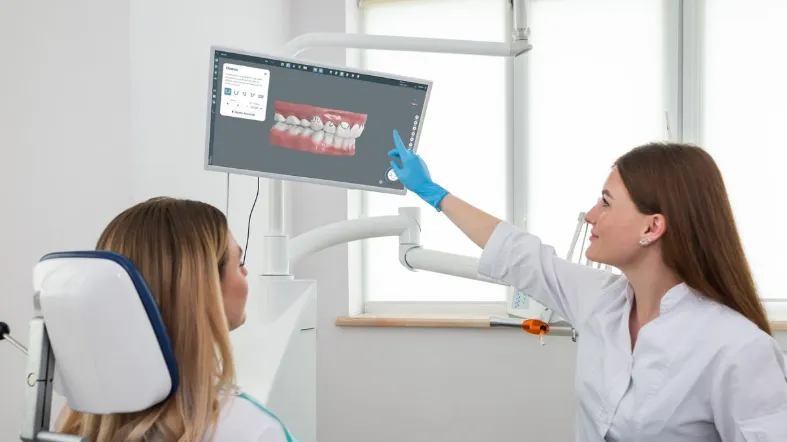
You do not need a medical degree to understand the basics. When your dentist orders or reviews images, ask them to show you exactly what they see. For example, “Can you point out the cavity and explain how big it is?” or “Where is the nerve in relation to the root?” Seeing the problem and the anatomy on the screen often reduces fear, because you can connect their recommendation to something real, not just their words.
2. Talk openly about your risk level and history.
Radiographic guidelines are based on risk. Share your cavity history, gum issues, medications, and any conditions that affect your mouth, such as dry mouth or diabetes. If you have had many X rays elsewhere recently, mention that too. This helps your dentist decide how often you truly need imaging and which type is most appropriate. It also builds trust, because your care is clearly tailored, not automatic.
3. Use clear questions to understand the plan.
Before you agree to any imaging or treatment, you can ask three simple questions. “What are you looking for with this image?” “What are my options if the image shows a problem?” “What happens if we wait?” These questions keep the focus on planning and consequences. They also help you weigh short term discomfort or cost against long term health, pain relief, and financial savings.
Moving forward with clarity and confidence
You might still feel a little nervous about X rays or 3D scans, and that is okay. Feeling cautious is not a weakness. It is a sign that you care about your health and your future. When you understand how general dentist imaging tools are used to plan effective treatments, you gain a measure of control. You can see how a small, well timed image can prevent a large, painful crisis later.
You do not have to become an expert in radiology. You simply need to feel comfortable asking questions, looking at the images with your dentist, and making decisions together. With the right information and a dentist who respects your concerns, imaging becomes less of a mystery and more of a helpful guide on your path to a healthier, more comfortable smile.