

Wondering if local link building really works? The short answer is yes. If your business wants to grow in a specific area, local link building is a must. It helps your brand stand out in a busy online space and brings in people nearby who are already looking for what you sell. Think of it as collecting online recommendations from trusted local websites that point back to your business.
Local link building is often ranked as one of the most important parts of local search. It affects how you show up in local organic results and in Google’s Local Pack. These are not vanity stats. They lead to more organic traffic, stronger brand awareness, and more qualified leads.
If you want to lift your local SEO, partnering with a skilled link building agency can bring the know-how and resources you need to build a plan that works.
What Is Local Link Building?
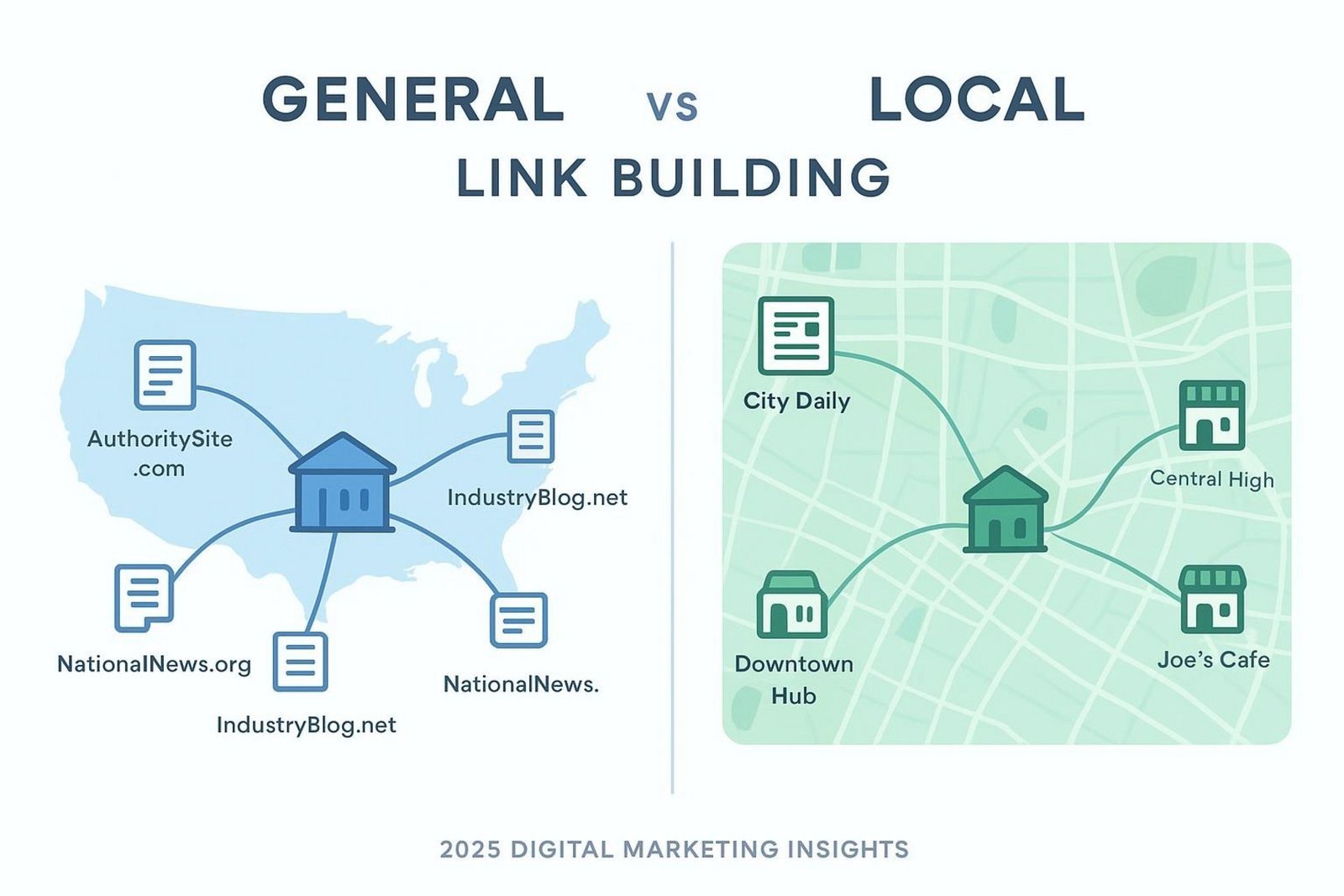
Local link building means getting backlinks from websites that are tied to your area. Unlike national link building that aims for lots of links from big sites, local link building focuses on your community. You want links from places that matter where you do business-local news, nearby companies, community groups, schools, and local bloggers.
The key part of a local link is where it comes from: the site should be tied to your city or region. This location match tells Google your company is real, trusted, and active in that area. It’s less about the number of links and more about quality and local fit, showing you are part of the community.
How Does Local Link Building Differ from General Link Building?
General link building casts a wide net to grow overall domain strength. It often targets big industry sites, national blogs, or high-authority domains, no matter where they are based.
Local link building is focused on your city, town, or neighborhood. A link from your chamber of commerce or a community news site is more valuable for a local business than one from a national blog. It’s about building relationships nearby, which is often more personal and manageable.
| General Link Building | Local Link Building |
| Targets wide audiences and big sites | Targets city/region-specific sites |
| Location is less important | Location is very important |
| Aim: boost overall domain strength | Aim: rank higher for local searches |
| Industry relevance first | Local relevance first (plus industry) |
Why Do Local Links Improve Search Rankings?
Local links are strong signals that help search engines see your business as relevant and trusted in a specific area. Google now looks for signs of real local presence and authority. When respected local sites link to you, it acts like a public vote that your business is active and trustworthy.
This is very important for improving your online visibility and attracting nearby customers. Without local links, even a great local business can struggle to rank, losing customers who rely on search to choose where to go.
Growth in Visibility for Geo-targeted Searches
Many people use search engines to find local options. “Near me” searches have grown fast, showing clear local intent. A strong base of local links helps you show up more often for these searches. Google sees links from local sources as a sign your site is relevant for that location. So if someone types “best coffee shop [your city],” your site has a better chance of ranking higher.
Beyond ranking gains, repeated visibility on local sites builds name recognition. As people see your name more often, they click more. Those clicks and visits send good signals back to search engines, which can lead to better results over time.
Increased Trust Signals for Nearby Customers
Local links also build trust with people in your area. A mention on a local news site, a community group page, or a trusted directory makes your business feel more credible. It shows you are part of the neighborhood, not just a random site online.
This trust matters. People prefer companies recommended by sources they already know. These links work like online word-of-mouth, helping customers feel confident and more likely to contact you.
Appearance in Google’s Local Pack
One big benefit of strong local link building is a better chance to appear in Google’s Local Pack (the block of three local listings with a map). Getting into the Local Pack can drive a lot of traffic. Agencies like NON.agency often emphasize this because local visibility can shift outcomes quickly.
Google Business Profile signals (like reviews) matter a lot for the Local Pack, but local links also play an important supporting role. Studies show “link signals” are among the top factors. Quality links from local sources tell Google your business is a strong presence in the area.
In short, local links help confirm your address, your activity, and your reputation, which can help you show up in the Local Pack.
What Types of Local Backlinks Are Most Valuable?
Some local links help more than others. The best ones come from trusted, truly local sources that search engines and your community respect. These links pass link equity, improve brand awareness, and send you targeted visitors.
Knowing which links to focus on helps you use your time well and get better results from your local SEO work.
Links from Local Directories and Business Listings
Local directories and business listings are a great starting point. They set up your online presence and confirm your name, address, and phone number (NAP) across the web. Think Yelp, YellowPages, Foursquare, Nextdoor, Google Business Profile, and industry directories like FindLaw or Angi, plus local government resources.
Many of these links are “nofollow,” but they still have big value. They provide key NAP consistency, which helps with local rankings. They also put you in front of people who are researching options. Also, AI Overviews often pull details from these structured sources, so clean and accurate listings matter more than ever.
Local News Sites and Media Outlets
Links from local news sites are some of the strongest you can get. These outlets are trusted by both search engines and residents. A mention or link from your city’s newspaper, a local news portal, or a community magazine sends a powerful signal to Google.
Getting featured can be harder than a directory listing, but the payoff is big. These links pass strong equity and bring targeted visitors. Also, AI Overviews often use established news sources, which makes these links even more helpful for visibility.
Community and Nonprofit Organizations
Working with local schools, charities, and community groups is a smart way to earn high-value local links. These sites are trusted and often list partners and sponsors with links.
When you sponsor events, donate, or join projects, these groups usually thank supporters on their sites with a link. That shows Google you are involved locally. It also builds goodwill and strengthens your brand.
Local Blogs and Influencers
Local bloggers and influencers have loyal local audiences. Their recommendations carry weight. Links from local food, lifestyle, or event bloggers can send both relevance and targeted traffic.
Focus on real relationships. Offer them useful content, a review item, or an invite to an event. If they enjoy the experience and share it, you get natural, contextual links and exposure to an engaged local crowd.
Proven Local Link Building Strategies That Get Results
Now that we’ve covered the why and what, let’s get into the how. Building a strong local link profile means taking action and engaging with your community. These tactics focus on relationships and real value, which lead to high-quality local links that drive results.
Get Listed in Authoritative Local Directories
This is probably the easiest and most basic step. Start by making sure your business is listed correctly on Google Business Profile, Yelp, Bing Places, Apple Maps, Foursquare, and Yellow Pages. Consistent NAP data is critical for local SEO.
Then add niche and hyper-local directories. Restaurants can use local food guides; lawyers can use local legal lists. Many offer free listings with a link. Build a wide base of consistent citations that confirm your business details. Also, AI Overviews often pull from these sources, so accurate and complete listings help.
Build Relationships with Local Businesses
Form real partnerships with nearby, non-competing businesses. Choose businesses that go well with yours. A gym can partner with a healthy cafe. A wedding planner can team up with a florist. These partnerships can show up in many ways that lead to links:
- Cross-Promotions: Run joint offers and link to each other’s sites.
- Blog Mentions: Write posts featuring local partners and ask for a mention in return.
- Shared Events: Co-host a local market, charity event, or small business fair and link to each other on promo pages.
Build these relationships offline too. Go to networking events, join the Chamber of Commerce, and look for ways to collaborate. Links often follow when there’s real trust and shared value.
Reach Out to Local Newspapers and News Websites
Local news links can change your local SEO in a big way. It might feel hard to get coverage, but it’s doable if you have a newsworthy story. Don’t just ask for a link-offer a strong angle.
Send press releases about grand openings, expansions, awards, or meaningful community work. Sponsor events people care about. Build relationships with reporters by following their work and introducing yourself. If you get a mention without a link, politely ask the editor to add one. This earns powerful links and builds trust with the community.
Sponsor or Participate in Local Events
Sponsoring events or joining community activities is a great way to earn local links and grow real-life visibility. Many events and teams list sponsors with links.
Pick events that match your values and audience-festivals, school teams, charity runs, or workshops. When you help, ask for a link on the sponsor or partner page. These pages often stay live for years, so the SEO benefits continue.

Offer Scholarships to Local Students
A local scholarship can help you earn strong links from schools and colleges. Education sites, especially .edu domains, carry a lot of weight. Even one good .edu link can help your rankings.
Create a page on your site with the scholarship details and application process. Email local high schools, community colleges, and universities. Many list scholarships and will link back to your page. This helps SEO and shows your support for local education.
Partner with Local Charities and Nonprofits
Support local charities by donating, volunteering, or co-hosting events. Most nonprofits list donors and partners on their sites with links.
When you contribute, ask politely for a mention and a link. These links are trusted and show your business is active locally. They also improve your brand image among people who value community support.
Create Locally Relevant Content and Resource Pages
Good local content attracts natural links. Skip generic posts and create content that helps your community, such as:
- Local Guides: “The Ultimate Guide to Dog Parks in [City Name],” “Best Family Restaurants in [Neighborhood].”
- Resource Pages: A complete list of local nonprofits, a map of walking trails, or a guide to local attractions.
- Original Local Research: Local consumer studies, real estate trend reports, or infographics on the local economy.
Share these resources with media and community groups. Useful local content positions your business as a go-to source and earns links over time.
Contact Local Bloggers and Influencers for Mentions
Local bloggers and micro-influencers often have active, local audiences. Work with those who cover topics tied to your business.
Offer a product or service for review, share unique data or stories, or invite them to an event. If they have a good experience, they’ll be more likely to write about you and link to your site. This brings SEO value and targeted traffic.
Reclaim Unlinked Mentions of Your Brand
Your business may already be mentioned online without a link. These unlinked mentions are easy wins. Use Google Alerts, Ahrefs, or Semrush to track them.
When you find one, email the author. Thank them for the mention and ask if they can add a link to your site. Since they already mentioned you, the chance of a yes is much higher than cold outreach.
Engage on Local Forums and Community Platforms
Local forums, Facebook groups, and subreddits are good places to help people and build presence. Join the conversation the right way: be helpful, not salesy.
Answer questions, share tips, and participate. If allowed, link to useful resources on your site when it directly helps someone. Even if links are “nofollow,” steady positive mentions build awareness, drive visits, and show local relevance. AI Overviews and LLMs can read this content too, which helps your overall reputation.
Advanced Tactics for Strategic Local Link Building
Beyond the basics, you can use advanced tactics that take more effort but can pay off. These methods include digging into competitor data, creating unique local insights, and using less common channels for exposure.
Analyze Competitor Local Backlinks
Look at your competitors’ backlinks to find ideas. Tools like Ahrefs, Semrush, or Moz’s Link Explorer can show you:
- Which sites link to them
- What content attracts those links
- What anchor text is used
- How natural and varied their profile looks
You might spot common directories, partner pages, news mentions, or sponsorships. Use these as a roadmap. Copying alone won’t win long-term, but it gives you fast, realistic targets to start with.
Set Up a Review-to-Link Process
Reviews matter a lot for local SEO and can also lead to backlinks. Some happy customers have their own sites or active profiles.
Use tools like Localo’s Review Manager to track strong reviews. When you get a detailed, positive review, check if the reviewer has a blog or audience. Reach out and offer to feature their quote, share a case study, or co-create content. They already like your business, so they’re more likely to link.
Develop Original Local Data or Case Studies
Create content based on local data or real results. Ideas include:
- A study of local buying habits
- A report on neighborhood real estate trends
- An infographic with local economic stats
- Case studies of work with local clients or charities
Publish and share these findings with media, bloggers, and groups. This positions you as a local expert. It earns strong links and improves your visibility.
Use Podcasts and Local Interviews
Podcasts have grown fast, and many cities have local shows. Hosting your own or being a guest can lead to links from show notes on podcast sites or the host’s website.
Find local podcasts and community programs that fit your story. Pitch helpful topics. Local news interviews can work the same way. These appearances bring backlinks and introduce you to new local audiences.
What to Avoid in Local Link Building
While getting local links is very important, some tactics can hurt you. Google keeps changing and is better at spotting spam. “Black-hat” shortcuts can lead to penalties that are hard to fix.
Stick to real value and honesty. Any tactic that fakes signals or tries to trick search engines can backfire. Focus on real relationships and useful content.
Risks of Low-Quality or Irrelevant Links
Don’t chase volume from random sites. Low-quality or unrelated links can hurt your rankings. Google may penalize attempts to manipulate results with irrelevant links.
If you’re in Austin, a link from a random New York site unrelated to your industry or area won’t help and could confuse search engines. Go for local and topic relevance. Five good local links beat a hundred weak ones.
Avoiding Over-automation and Link Schemes
Automated outreach with generic emails rarely works and can damage your brand. Local link building is about people and relationships.
Also avoid buying links, heavy reciprocal linking just for SEO, and private blog networks (PBNs). These break Google’s rules and can lead to penalties. Some natural link exchanges between real partners are fine, but large-scale schemes get flagged. Earn links by helping people and offering real value.
Common Questions About Local Link Building
Local link building raises common questions. Knowing how it works helps you plan better and set realistic goals. Here are direct answers to the most frequent ones.
How Do I Find New Local Link Opportunities?
Finding new opportunities is ongoing. Start with careful research in your community: local news sites, community blogs, business groups, and nonprofits. Use Google searches like “your city + blogs,” “your city + chamber of commerce,” or “your city + [your industry] directory.”
Check competitor backlinks in Ahrefs or Semrush. Set Google Alerts for your brand and turn unlinked mentions into links. Go to local events, join business associations, and build relationships. Be active online and offline and watch for ways to collaborate.
How Quickly Do Local Links Impact Rankings?
Results take time. You might see small gains in 4-8 weeks, especially from NAP citations. Bigger ranking moves from link building often take longer. Timing depends on competition, link quality, and your site’s overall health.
Treat local link building as a long-term play. Joy Hawkins’ study shows even one strong backlink can move organic rankings, though Local Pack gains may be smaller and slower. Keep quality high and growth steady. Slow and consistent beats short bursts.
Start Improving Your Local SEO with Effective Link Building
Local link building is more than a technical task. It’s a key part of winning your local market. You’re weaving your business into your community, building trust, and proving local authority to search engines and customers. As AI grows across search, real local signals matter even more.
While tactics may change, the core idea stays the same: be authentic, be useful, and build relationships. Every strong local link is a vote of confidence and a new path to your site. Aim to be the most useful, trusted, and locally relevant source in your niche. By sticking with these habits, you build links and also build a strong local brand that can adapt and grow in a fast-moving digital world. Roll up your sleeves, connect with your community, and watch your local visibility climb.