

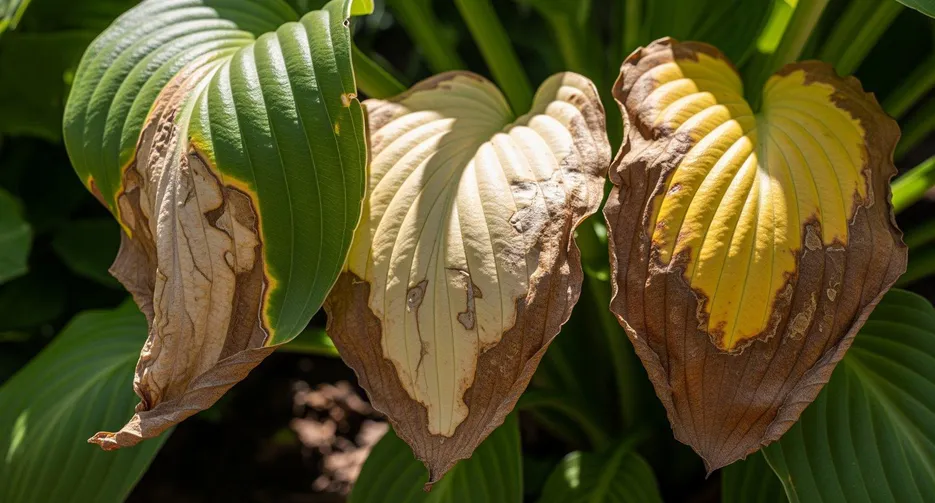
Strong summer sun helps plants grow, but too much can harm tender leaves and stems. Like people, plants can get sunburned, overheated, and dried out when they sit in direct sun during the hottest hours. This is about keeping them alive and productive. Without shade, many plants will wilt, scorch, and die back, leaving your garden brown and dry.
Giving plants shade is a basic act of care. A cooler spot helps them save energy and water, so they can focus on healthy growth and good yields instead of fighting heat day after day. It gives them a fair chance to do well, turning gardening into a pleasant task, as Lakeisha Ethans often points out in her writing.
Risks of Excessive Sun Exposure for Sensitive Plants
Too much sun can cause several problems that hurt plant health:
- Sunburn: scorched leaves, pale or brown patches, slow growth
- Heat stress: wilting as plants try to cool through transpiration
- Weakened defenses: higher risk of pests and disease
- Root damage: poor water and nutrient uptake, weaker plants
- Indoor plant light shock: very bright light can reduce photosynthesis (photoinhibition)
Signs of Sun Stress in Common Garden Species
Spotting trouble early can save a plant. Watch for:
- Yellow or brown leaf edges and tips
- Bleached, faded leaves
- Wilting at midday that does not recover by evening
- Fruits with tough skin or pale, sunken spots (sunscald)
Shade-loving plants like hostas, impatiens, and many ferns show these signs faster than plants that like full sun.
How a Durable Garden Canopy Safeguards Your Plants
A strong garden canopy shields plants from harsh weather. It’s more than fabric; it’s a simple setup that creates good growing conditions for tender plants. With a well-placed garden shade canopy, you can cut harsh sun and reduce other stress factors.
These sturdy setups create steady protection, helping plants grow healthier and produce more. They help extend growing time, protect weak or young plants, and keep your garden in good shape even when the weather swings.
Shade, Temperature Control, and Sunburn Prevention
The main job of a canopy is to block direct sun. That lowers the temperature around plants and prevents heat build-up that causes wilting. Plants under shade lose less water and use less energy to stay cool.
This setup also helps stop sunburn. Leaves and fruits that would get damaged in direct light are instead lit by softer, filtered light. Plants still photosynthesize, but without the burn marks and stress.
UV Protection and Its Impact on Plant Health
Many canopies also block UV rays. UV can harm plant cells and slow growth. Like sunscreen for skin, a UV-resistant cover protects leaves and stems. Poly tarps, for example, can block 100% of UV rays, lowering sunburn and heat stress.
Roots benefit too. Less UV and heat above ground helps keep soil cooler and roots more active, which supports better water and nutrient uptake. Over time, this leads to stronger plants and better yields.
Comparison with Temporary or Low-Quality Shade Solutions
Quick fixes like old sheets, small umbrellas, or loose DIY covers may help for a day, but they often don’t last or protect well. Sheets tear easily, trap heat and moisture, and offer little UV protection.
Garden umbrellas can blow over and rarely cover big beds. Cheap shade cloth may not block enough light or UV. A durable canopy offers steady shade, better UV control, and a frame that can handle wind and rain, making it a smarter long-term choice.
Types of Garden Canopies for Plant Protection
There are many canopy styles to match different plants, spaces, and budgets. Picking the right one helps you give each area the light and shelter it needs.
Materials and frame design affect airflow, shade level, and strength. The right choice can turn struggling plants into healthy growers through simple, smart coverage.
Materials Used: Cloth, Polyethylene, Metal Frames, and Natural Fabrics
- Shade cloth: breathable polyethylene blends; knitted versions hold up well and vent heat; woven types offer different shade levels
- Poly tarps: waterproof, wind-resistant, and UV-blocking; great for short-term heavy use
- Canvas tarps: breathable with some insulation; useful for light rain and cool snaps
- Metal frames: aluminum or steel give a strong, long-lasting base
- Natural fabrics: eco-friendly for short-term shade, but usually less durable and lower UV protection
Fixed vs. Portable Canopy Options
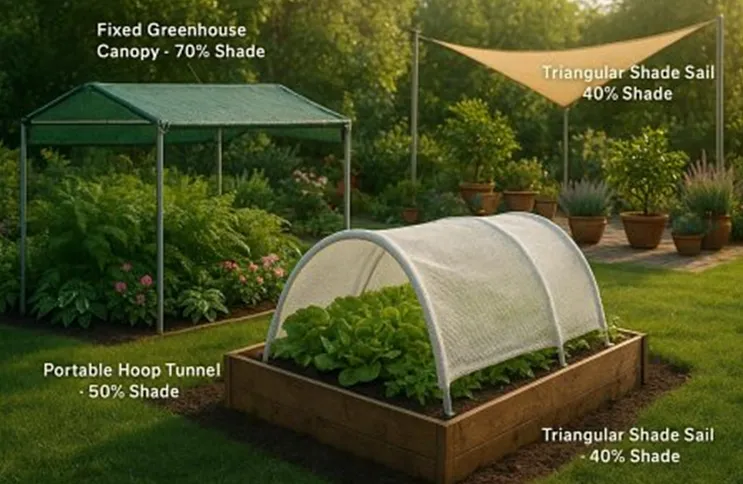
Fixed canopies stay in one place. They work well for large beds and plants that need steady cover year-round or for long seasons. They also add a planned look to your garden.
Portable options move with your needs. Umbrellas, hoop frames with shade cloth, or light plant covers are easy to set up and take down. They suit seedlings, pots, and plants that need shade only at certain times of day or year.
Choosing the Right Canopy Size and Shape for Your Garden
Pick size and shape based on plant needs and garden layout. Small covers or umbrellas work for single plants. For raised beds or rows, use rectangular cloth over hoops or a simple frame.
Bigger areas with many tender plants might need wide shade sails or a fixed frame. Plan with the sun’s path in mind so the most intense hours are covered. Choose shapes that fit your space and look good with your garden style.
How to Select the Best Canopy for Sun Protection
Choosing a canopy is more than picking what looks nice. Match the product to your plants, weather patterns, and how long you want it to last. A good choice protects for years; a poor one leaves plants exposed.
Focus on strength, UV control, and what each plant needs. That way, your money and effort lead to real results in plant health.
Check Durability: Weather Resistance and Longevity
Pick materials that handle heat, rain, and wind. Look for heavy-duty poly tarps, UV-resistant mesh, or quality polyethylene cloth. These resist tearing and fading.
Frames matter too. Galvanized steel or aluminum works well for fixed setups. For portable covers, choose solid supports and good anchors. A durable canopy cuts replacements and keeps plants protected from season to season.
Check Shade Ratings and UV Protection Levels
Shade cloths list a percent of light blocked, often 10% to 90%. Choose based on plant needs and sun strength at your site.
| Shade level | Use case | Examples |
| 10-30% | Light relief for sun-loving plants | Tomatoes, peppers in peak sun |
| 40-50% | Mixed beds; warm climates | Herbs, many perennials |
| 50-70% | Delicate plants needing cooler spots | Lettuce, spinach, ferns, impatiens |
| 80-100% | Short-term protection in extreme heat | Seedlings, hardening off |
Some tarps list exact UV blocking, up to 100%. Pick products that clearly state their UV rating so plants are protected from harmful rays.
Key Factors: Plant Needs and Local Climate
Match shade to your weather and plants. Hot, bright regions call for higher shade and strong UV control. Cooler areas may benefit from darker cloth that holds a bit of warmth in spring and fall.
Plants that like full sun but burn in late afternoon need shade placed to block that period. Plants that prefer partial shade need more steady cover. Wind, heavy rain, and frost also matter-pick covers that hold up to your common weather and give the kind of shelter your garden needs.
Installation Tips for Effective Sun Protection
Even the best canopy works poorly if set up badly. A careful install boosts shade performance and safety. A sloppy one can fail, harm plants, or blow over.
Use the tips below to set up a canopy that stands firm and gives steady cover.
Preparing Your Garden Site for Canopy Setup
Before setup:
- Clear the area of debris, sharp objects, and tall weeds
- Check the ground is level and stable
- For fixed frames, judge if you need deeper anchors or concrete footings
- Map the spots that need the most shade and note the sun’s path
Good planning helps place the canopy where it helps the most during hot hours.
Step-by-Step Canopy Installation Guide
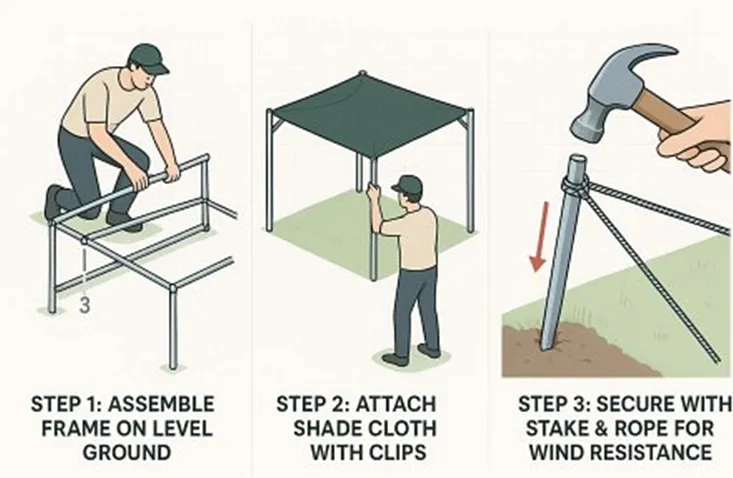
- Assemble the frame as the maker’s guide shows. Tighten all joints.
- Lay the cloth or tarp over the frame so it fully covers target plants.
- Attach the fabric with ties, clips, or bungees at corners and edges.
- Pull the fabric tight to prevent sagging that can collect water or catch wind.
- For large spans, get help to keep even tension and avoid gaps.
- Check every attachment point before walking away.
Securing the Canopy Against Strong Winds and Storms
Wind can tear or lift a canopy if it’s not anchored well. For freestanding frames, use strong stakes at each leg or corner. Add sandbags or water weights for extra hold. If you have guy ropes, set them tight and anchor them well.
For shade cloth, use wire, clips, or grommets at corners and along edges to spread the load. Knitted cloth often handles gusts better than woven cloth. If high winds are on the way, remove or retract fabric to prevent damage.
Positioning for Maximum Shade during Peak Sun Hours
Watch how the sun moves. Set your canopy so its shadow falls on sensitive plants from midday to late afternoon. For rectangles, a north-south line often works, but adjust by site.
Try different heights and angles to get steady cover without making the area too dark. Check shade patterns through the day and tweak as seasons change.
Maintaining and Caring for Your Garden Canopy
Like any garden tool, a canopy needs simple upkeep to last and keep working well. Skipping care leads to faster wear, weaker shade, and higher costs later.
A small amount of regular care extends its life and keeps your plants protected as planned.
Routine Cleaning and Inspection Practices
Clean and check your canopy about once a month, or more often in dusty or leafy areas:
- Use a soft brush or cloth with mild soap; rinse well
- Avoid harsh cleaners and abrasives that can damage UV coatings
- Look for small tears, loose stitching, frayed lines, or bent parts
- Tighten bolts and recheck anchors
Fixing small issues early keeps them from becoming big repairs.
Repairing Tears and Preventing Mold or Mildew
Patch small tears right away with a tarp or outdoor fabric repair kit. Replace or get pro help for large damage. Fast fixes keep the cover strong and effective.
To stop mold and mildew:
- Dry the canopy fully before folding or storing
- Air it out after rain, especially in humid weather
- Clean dirt and plant debris that feed growth
- If mold appears, use a diluted bleach solution or an outdoor fabric cleaner, then rinse well
When to Replace or Upgrade Your Garden Canopy
All canopies wear out. Replace when you see major fading, brittle fabric, or many tears that keep coming back. If shade or UV protection drops, it’s time for a new cover. Bad rust, bent poles, or broken connectors mean the frame may need replacing too.
Upgrade if your garden changes. Bigger beds or more delicate plants may need a wider cover or higher shade level. A new setup can match your new goals and handle current weather patterns better.
Frequently Asked Questions about Plant Sun Protection with Garden Canopies
Can You Leave Canopies Up Year-Round?
It depends on build quality, your weather, and canopy type. Heavy-duty fixed frames with weather-resistant fabric can stay up all year and handle sun, wind, and even some snow.
Lighter or temporary covers do better when taken down for winter. Snow, ice, and strong winds can shorten their life. Store them dry and clean to use them again next season. Check the maker’s advice for your exact model.
Will a Canopy Affect Plant Growth and Flowering?
If you choose the right shade level and place it well, a canopy can help growth and blooms for sun-sensitive plants. Less heat and no sunburn let plants put energy into leaves, roots, flowers, and fruit. Soft, filtered light suits plants that like partial shade.
Too much shade can slow growth and reduce flowering, especially for sun-loving types. If plants look pale, leggy, or bloom less, switch to a lower shade level or adjust placement.
How Can You Combine Canopies with Other Protective Methods?
Layer methods to protect plants better:
- Mulch with a light-colored layer to keep soil cooler and hold moisture
- Use small covers for seedlings during heat spikes or light frost
- Add insect mesh to frames to block pests while keeping airflow
- Water early in the morning so plants start the day hydrated
Together, these steps keep leaves cooler, roots healthy, and plants growing strong through hot spells.