

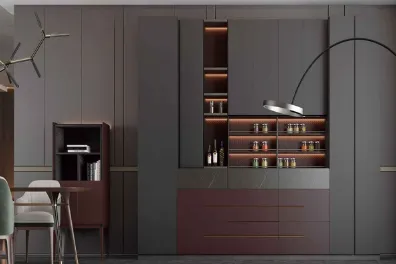
When clients ask me what makes a house feel truly “finished,” I often point to color cohesion as the secret ingredient. You can invest in gorgeous furniture pieces and stunning architectural details, but without a thoughtful color story flowing from space to space, something always feels slightly off. It’s like listening to a beautiful song where occasionally a note falls flat—you might not immediately identify the problem, but you sense that something isn’t quite harmonizing.
Why Color Flow Matters
Have you ever walked through a home where each room feels like it belongs to an entirely different house? The jarring transitions between spaces can create a disjointed experience that subtly affects how we feel in a space. Interestingly, our brains crave visual connections and patterns—when colors flow naturally from room to room, we experience a sense of calm and order, even if we’re not consciously aware of it.
What often surprises people is that creating color cohesion doesn’t mean every room should look the same. Quite the opposite! A well-designed color story creates unity while still allowing each space to express its own personality and purpose. Think of it as members of the same family—related but unique.
The Fundamentals of a Whole-Home Color Palette
Start With the 60-30-10 Rule
When approaching full house interior design, I typically recommend starting with the classic 60-30-10 color distribution rule:
- 60% dominant color (walls, large furniture pieces)
- 30% secondary color (accent furniture, textiles)
- 10% accent color (accessories, art, small details)
This creates balance within each individual room. The magic happens when you thoughtfully connect these percentages across different spaces.
Develop Your Core Palette
Select 3-5 colors that will appear throughout your home. These form your core palette—the foundation of your color story. When choosing these colors, consider:
- The fixed elements you can’t change (flooring, cabinetry, stonework)
- Natural light conditions in different rooms
- The overall mood you want to create
- Your personal preferences (yes, it should actually include colors you love!)
I once worked with a client who insisted she wanted an entirely neutral house—whites, beiges, and grays throughout. About halfway through our full house interior design project, she confessed she actually adored emerald green but was afraid it was “too much.” We ended up incorporating that green as part of her core palette, and it brought her genuine joy every time she encountered it. The lesson? Your core palette should reflect your authentic preferences, not just what’s safe.
Strategies for Room-to-Room Flow
The Thread Technique
One of my favorite approaches is what I call the “thread technique”—carrying specific color elements from one room to the next, creating a visual thread that leads you through the home. For example:
- The accent color in your living room becomes the secondary color in the adjacent dining room
- The dominant color in your hallway appears in smaller doses in connecting rooms
- A specific shade appears in artwork throughout different spaces
Zone Coloring
Another effective strategy is to consider your home in color zones:
- Public spaces (living room, dining room, entryway) might share stronger color connections
- Private spaces (bedrooms, bathrooms) can diverge slightly while still maintaining some linking elements
- Transitional spaces (hallways, landings) serve as color bridges between zones
The Neutral + Accent Approach
If you’re less confident with color, the safest approach is to:
- Use a consistent neutral background throughout the home
- Introduce color through furniture and accessories
- Create flow by repeating accent colors in different combinations from room to room
Furniture as Color Carriers
Furniture plays a crucial role in your color story since it occupies significant visual space. When selecting pieces, consider how they’ll contribute to your overall palette.
Large upholstered items like sofas offer substantial color blocks—choose these carefully as they’ll dominate the room’s color impression. If you’re working with Foshan furniture manufacturers, known for their craftsmanship in wood pieces, consider how different wood tones function as colors in your palette. Walnut, oak, and mahogany each bring distinct warm tones that should be factored into your color decisions.
Smaller furniture items provide opportunities for color accents without overwhelming a space. A side table in a bold hue can echo an accent color from another room, creating that subtle connection that makes a house feel cohesive.
Common Mistakes to Avoid
The Matching Syndrome
There’s a fundamental difference between cohesive and matching. Cohesive color flow doesn’t mean buying the same colored sofa for every room or painting all walls identical shades. It’s about thoughtful relationships between colors, not repetition.
Ignoring Transitions
The spaces between rooms—hallways, stairwells, foyers—are crucial for successful color flow. These transitional areas should function as visual palate cleansers and connectors, not as distinct color environments.
Too Many Colors
Even the most color-confident designer typically limits a home’s palette. When every room introduces completely new colors, the home starts to feel chaotic. The magic number for most residential projects seems to be 5-7 colors total (with variations in shade and intensity, of course).
Real-World Applications
Let me walk you through how this might work in practice:
Imagine a core palette consisting of soft white, charcoal gray, navy blue, terracotta, and brass accents. In the living room, walls might be soft white (60%), furniture primarily in charcoal and navy (30%), with terracotta and brass in accessories (10%). Moving to the dining room, perhaps terracotta takes a more prominent role in dining chairs (part of the 30%), while the navy appears in a smaller dose through artwork or table linens. The kitchen might return to the softer palette with white cabinetry but incorporate navy in an island base and brass hardware as connectors to other spaces.
Come to think of it, I applied a similar approach in my own home renovation last year. But I made one significant mistake. I fell in love with a particular shade of blue-green for my office and used it generously without considering how it would connect to adjacent spaces. For months, that room felt somehow “detached” from the rest of the house until I finally introduced elements of that blue-green in small doses in connecting rooms. And suddenly, everything clicked into place.
Practical Tips for Implementation
- Create a physical color board with samples of all key colors before making major purchases
- Test colors in the actual lighting conditions of each room
- Consider the views between spaces—what rooms can you see from each position?
- Introduce color through layers—start with more neutral foundations and build color through more easily changeable elements
- Remember that color flow includes more than just paint—textiles, wood tones, metals, and even greenery contribute to your color story
When done well, a cohesive color story creates a sense of intention and harmony that elevates even the simplest spaces. Your home should feel like a collection of spaces that have a relationship to each other—distinct conversations that are clearly part of the same larger story.