

In the current digital era that is highly dynamic and fast, the IT teams are always under pressure to provide quality connectivity, seamless performance, and secure access across all corners of the network.
Employees expect business applications to work without interruption, and devices such as IP phones, video surveillance systems, and wireless access points require constant power and bandwidth.
However, to create a network that is capable of all this without needing constant downtime or complicated servicing often seems like a daunting task. IT infrastructure has to respond to the fluctuating demand and, at the same time, be cost-effective and simple to scale.
Access switches enter the picture here.
As a base of campus and enterprise networks, they connect end devices and provide power to critical applications and guarantee the seamless flow of traffic. But not all switches have the same capabilities.
The right access switches are unique in that they provide certain features to render them indispensable to the current IT infrastructure. This article will discuss eight of these features that make access switches indispensable.
1. Power over Ethernet (PoE) Support
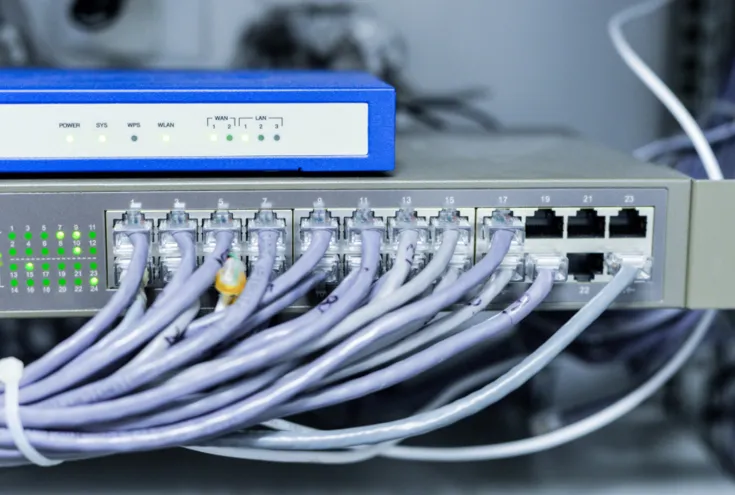
Power over Ethernet is considered one of the characteristics of a modern access switch.
With PoE, switches can power devices such as IP cameras, wireless access points, and VoIP phones directly through Ethernet cables. This eliminates the need for extra adapters to power the device and lowers the cost of installation.
More importantly, it streamlines network growth, enabling teams to install devices on the fly wherever they are needed. Advanced switches are also available in PoE+ and PoE++ options, which accommodate the high power requirements of specialized equipment.
2. Scalability and Port Density
Expanding networks need hardware that does not introduce bottlenecks.
Access switches often offer a flexible port density of 8 ports up to high-density 48 ports. This scalability facilitates easy alignment of the switch capacity with the organizational requirements.
Stacking features in bigger setups enables several switches to act as a single unit, providing simplified management as well as uniform performance throughout the network.
3. Robust Security Features
Security is no afterthought when it comes to IT infrastructure. Currently, most access switches have such functionality as 802.1X authentication, integration of RADIUS/TACACS+, DHCP snooping, and ARP inspection.
These mechanisms prevent unauthorized access, spoofing, and denial of service attacks at the network perimeter. Switches provide the initial barrier because they have the capability to limit vulnerabilities by implementing policies at the point of connection.
4. Quality of Service (QoS) Controls
Not all network traffic carries the same importance. Video calls, for example, need low latency and high priority compared to file downloads.
This is where QoS features of access switches play a critical role. They allow IT teams to classify and prioritize traffic, ensuring that voice, video, and business-critical applications always get the resources they need.
As a result, employees experience fewer disruptions, and productivity remains unaffected by heavy data flows.
5. Advanced Layer 2 and Layer 3 Capabilities
Modern access switches go beyond simple data forwarding. Layer 2+ and Layer 3 Lite features such as VLANs, multicast management, link aggregation, and static routing enable more granular control of traffic.
These capabilities help segment networks for improved performance and security. For enterprises with growing complexity, these features reduce the strain on core switches while keeping traffic efficient and organized.
6. High-Speed Uplink Options
As end devices continue to demand higher throughput, uplink performance becomes a deciding factor. Many access switches now offer uplink ports supporting 10G, 25G, or even higher speeds.
These uplinks ensure that traffic from dozens of connected devices can flow smoothly to distribution or core layers without creating congestion. For IT teams, this means fewer bottlenecks, better application performance, and more efficient handling of bandwidth-heavy workloads like video conferencing, cloud applications, and large-scale data transfers across the network.
7. Centralized Management and Monitoring
When you have large or distributed networks, ease of management is paramount. Access switches offer centralized configuration, usually by means of web interfaces, SNMP or network management systems.
Such characteristics as real-time monitoring, traffic analytics, and remote troubleshooting enable IT staff to stay in control without necessarily being on-site. Automatic enforcement of policies and centralized updates make day-to-day activities even more straightforward, and in-built alerts allow responding to problems faster.
This simplifies the nature of operations and conserves valuable time, particularly in multi-site operations.
8. Reliability and Redundancy Features

Downtime is costly, both in terms of productivity and reputation. Access switches enhance reliability through redundancy mechanisms, such as link aggregation, spanning tree protocols, and Ethernet ring protection.
These features ensure that if one path fails, traffic can automatically reroute without interrupting services. Additionally, support for stacking multiple switches adds another layer of fault tolerance and simplified management.
Combined with hardware reliability—such as hot-swappable power supplies and smart cooling systems—these features help deliver the high availability that IT infrastructure demands.
Conclusion
Access switches are more than just simple connection points; they are the intelligent backbone of modern IT environments. With features such as PoE support, scalability, robust security, QoS, advanced Layer 2/3 functions, high-speed uplinks, centralized management, and built-in redundancy, they deliver the balance of performance, flexibility, and reliability that today’s infrastructure requires.
When evaluating network upgrades, focusing on these features ensures that IT teams can build a foundation capable of supporting current demands while being ready for future growth. The right access switches transform networks from basic connectivity tools into resilient, efficient, and secure platforms for business success.