

You might be thinking about booking a visit to a combined dental and medical spa, like a dental spa Lancaster, but your mind keeps spinning. You want healthier teeth, maybe a brighter smile, and you are also curious about skin treatments or injectables. At the same time, you feel nervous about the unknown. Who will you meet first. What will they do. Will it hurt. Will it feel clinical, or relaxing, or somehow both.end
This mix of hope and worry is very common. Many people put off care for months or even years because they are unsure what that first visit will really look like. You are not being dramatic. You are simply trying to protect yourself from surprise, discomfort, and embarrassment.
The good news is that a new patient journey at a dental and med spa usually follows a clear, predictable path. You can expect a warm welcome, a careful review of your health, a thorough exam, and then a calm conversation about options. Think of it less as a one time appointment and more as the start of a plan that respects your goals, your budget, and your nerves.
So where does that leave you. This guide walks through what you can expect step by step, from the moment you walk in to the moment you leave, so you can feel prepared instead of bracing for the worst.
Why does a dental + med spa visit feel so stressful at first?
For many people, it started with a small concern. A tooth that twinges with cold water. A smile you hide in photos. Fine lines that suddenly seem deeper. You think, “I should get this checked.” Then another thought arrives. “What if they judge me. What if it is expensive. What if something is seriously wrong.”
This is the problem. You know you need care, yet the fear of not knowing what will happen keeps you stuck. Dental anxiety is very common. Even simple cleanings can feel overwhelming. According to resources like the American Dental Association’s patient guide, many people carry old memories of rushed appointments or pain, which makes it hard to trust a new setting. If you are curious, you can read more about common concerns people have when getting ready to go to the dentist.
In a combined dental and medical spa, the worries sometimes double. You might wonder about the safety of cosmetic treatments. You might worry that you will be pressured into services you do not want. You might feel embarrassed to talk about appearance, even though it matters deeply to you.
Because of this tension, many people show up already on edge. Heart racing. Jaws clenched. Ready to bolt if something feels off. That is the emotional side. There are also practical concerns about cost, time off work, and insurance coverage for dental care compared with cosmetic spa services.
So what actually happens when you walk through the door for that first visit.
What happens from check in to check out during your first visit?
Most new patient experiences follow a rhythm. The details can vary, but the structure is usually similar, even in top teaching clinics such as those described in some new patient overviews from academic dental centers. Knowing the typical flow can help you feel less at the mercy of the unknown.
1. Check in and paperwork
You will be greeted at the front desk and asked to complete health history forms. These cover medications, allergies, medical conditions, and prior dental or cosmetic treatments. It can feel like a lot of questions, yet every answer helps the team keep you safe.
You may also be asked about your main concerns. For example, you may write “I am worried about gum bleeding” or “I want to talk about whitening and Botox.” This helps the team focus the visit on what matters most to you.
2. Conversation before any exam or treatment
Next, you are usually brought to a private room. A dental professional, and sometimes a medical spa provider, will sit down and talk with you. This is where you share your story. How long you have had symptoms. What you hope will change. What scares you.
A respectful team will listen closely and repeat back what they heard. For example, “You are mainly concerned about your front teeth and the lines around your mouth, and you are worried about pain.” That repetition is not a script. It is a way to show they understand and to correct anything that is off before moving forward.
3. The dental exam and any needed records
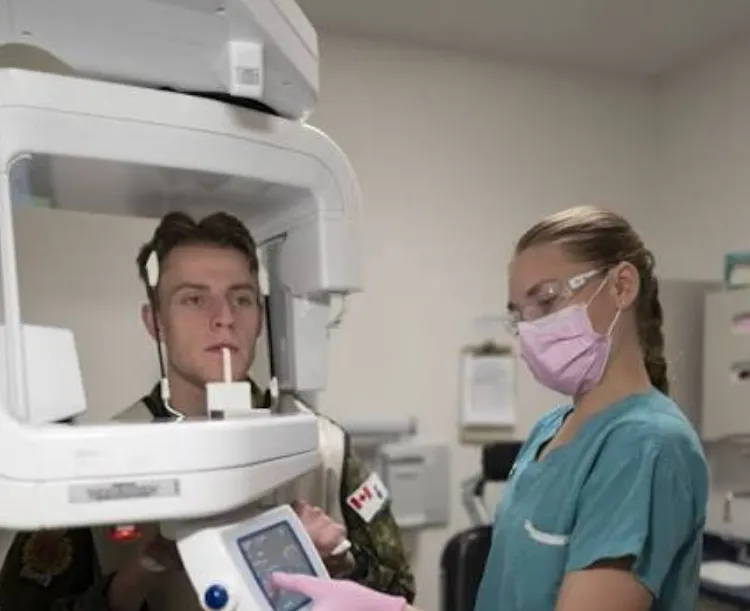
Once you feel ready, the clinical part begins. A standard dental exam usually includes a look at your teeth, gums, tongue, and jaw, and in many cases dental X rays. According to resources like the MedlinePlus summary on what to expect during a routine dental exam, this is when the dentist checks for decay, gum disease, and signs of other health problems that can show up in the mouth.
In a dental and med spa setting, there may also be photos taken of your smile or face. These images help with cosmetic planning, for example when deciding on whitening, veneers, fillers, or skin treatments.
4. Evaluation of cosmetic and spa needs
If you are interested in med spa services, you will often meet a provider who focuses on skin and facial aesthetics. They may examine your skin texture, tone, and facial muscle movement. They might ask about your routine, sun exposure, and past treatments.
Again, the goal is not to “fix” you. It is to understand your goals. Some people want subtle changes. Others want a more dramatic shift. Both are valid. What matters is that you feel heard.
5. Discussion of findings and options
After the exams, there is usually a review conversation. This is where you hear what the team found and what they recommend. It might include basic dental work, preventive cleanings, cosmetic dental services, or med spa treatments such as peels or injectables.
This is the moment where pressure often shows up. You might worry that you will be pushed into expensive care. A thoughtful practice will instead walk through options with pros, cons, costs, and timing. You should feel free to ask, “What happens if I wait,” or “Is there a simpler option.”
6. Planning, scheduling, and payment
Before you leave, you will usually meet with someone at the front desk or treatment coordinator. They can help you prioritize which services to do first, explain what insurance may cover for dental work, and outline payment options for cosmetic or med spa care, which is often out of pocket.
You might leave with a written plan, a few upcoming appointments, and some at home instructions. Most importantly, you should walk out feeling clearer than when you arrived.
How do dental and med spa choices compare in safety, cost, and results?
Once you understand the flow of a new patient experience at a dental and medical spa, the next question is how to choose the right mix of services. Is it better to focus on dental health first. Can you safely combine cosmetic and spa treatments. How do costs and results compare.
The table below offers a simple comparison of common paths people consider during their first few visits.
| Approach | Main Focus | Typical Benefits | Common Risks or Drawbacks | Who It Often Suits Best |
|---|---|---|---|---|
| Dental health first | Treating decay, gum disease, bite issues | Reduces pain, protects teeth, supports long term health | Cosmetic goals may feel delayed. Some treatments can be time consuming | People with pain, bleeding gums, or overdue checkups |
| Cosmetic dental focus | Whitening, bonding, veneers, alignment | Improves smile appearance, boosts confidence and social comfort | May not address hidden disease if exams are skipped. Often higher cost | People with stable dental health who want a smile upgrade |
| Med spa focus | Skin care, injectables, peels, facials | Enhances skin quality and facial features, can be relaxing | Usually not covered by insurance. Results need maintenance | People mainly concerned about skin or facial aging |
| Blended plan | Stepwise mix of dental health, cosmetic, and spa care | Balances health, function, and appearance over time | Requires planning and patience. Multiple visits | Most new patients who want both health and aesthetic changes |
There is no single “right” route through a general and cosmetic dental and medical spa. The key is alignment. Your plan should match your health needs, your comfort level, and your financial reality.
What can you do today to make your first visit smoother and less stressful?
Knowing the structure of the visit is helpful. Yet anxiety often lives in the details. What can you actually do before and during the appointment to feel more in control.
1. Write down your goals and your fears
Before your visit, take ten quiet minutes and make two short lists. On one side, write what you hope for. For example, “Stop tooth sensitivity,” “Smile without covering my mouth,” “Soften the lines around my eyes.” On the other side, write what you fear. For example, “Pain,” “Being judged,” “Unexpected costs.”
Bring this list with you. Hand it to the provider if speaking feels hard. Clear communication at the start can shape the entire new patient dental and med spa visit.
2. Ask for a step by step explanation in plain language
During the exam or consultation, you are allowed to slow things down. You can say, “Can you walk me through each step before you do it,” or “Please tell me what you are seeing in simple terms.” Many people feel calmer when they understand what is happening in real time.
If something is confusing, ask for a pause. You might say, “I am feeling overwhelmed. Can we go over the main points again.” A supportive team will respect that and adjust.
3. Plan your budget and timing ahead of treatment
After you hear the recommendations, resist the urge to decide everything on the spot if you feel pressured. You can ask for a printed plan that separates health related dental care from elective cosmetic or spa services.
Take this plan home. Review your budget. Consider what must happen soon for your health and what can wait. Then schedule in phases. This avoids resentment later and helps you feel that you are choosing care, not being swept along by it.
Moving forward with more clarity and less fear
Your first visit to a combined dental and med spa does not need to be a test of courage. When you know what to expect, when you bring your questions and limits into the room, and when you work with a team that respects your voice, that visit becomes the start of a healthier, more confident chapter instead of something to dread.
You deserve a new patient journey that feels calm, informed, and tailored to you. Take a breath, gather your thoughts, and take the next small step toward the care you have been putting off. Your future self will be grateful you did.