

You might be feeling a little worn out by dental visits that seem to stretch on forever. Maybe you remember gagging on trays filled with goo, coming back for repeat appointments because “the impression wasn’t quite right,” or getting a crown that never felt like it truly belonged in your mouth. If you are looking for a dentist in Waseca, MN, it is a lot, and it is understandable to wonder if there is a better way.end
The good news is that there is. Digital impressions use a small camera to scan your teeth, creating a precise 3D model on a screen. No trays. No mess. Fewer surprises. In simple terms, digital dental impressions are more accurate, more comfortable, and often more predictable than traditional methods. That means fewer remakes, fewer adjustments, and a smoother experience for you.
So where does that leave you? If you are facing a crown, bridge, implant, or clear aligners, understanding why modern digital impressions often outperform old-fashioned materials can help you ask better questions and feel more in control of your care.
Why did traditional impressions feel so frustrating in the first place?
Think about what happens with a traditional impression. Your dentist mixes a thick material, loads it into a tray, and presses it over your teeth. You must hold it still while it sets. If you move, gag, or the material pulls away, the whole thing can be distorted. The lab then pours plaster into that impression to create a stone model, which introduces even more room for small errors.
Individually, each of these steps might only be off by a fraction of a millimeter. Emotionally though, those tiny errors show up as a crown that feels “a bit high,” a bridge that needs grinding, or a retainer that pinches. That means more time in the chair, more numbing injections, and sometimes more cost if things need to be redone.
Because of this tension, you might wonder whether anyone has checked how accurate these different methods really are. Researchers have. Modern studies comparing traditional impressions with digital scans show that digital techniques can be consistently more precise and more stable, especially for common treatments like crowns and bridges. For example, a recent review of accuracy in digital workflows for crowns and fixed restorations found that well performed digital impressions can match or exceed conventional techniques in clinical use. You can see one such detailed review in this scientific overview of digital versus conventional approaches.
How do digital impressions actually improve accuracy and comfort?
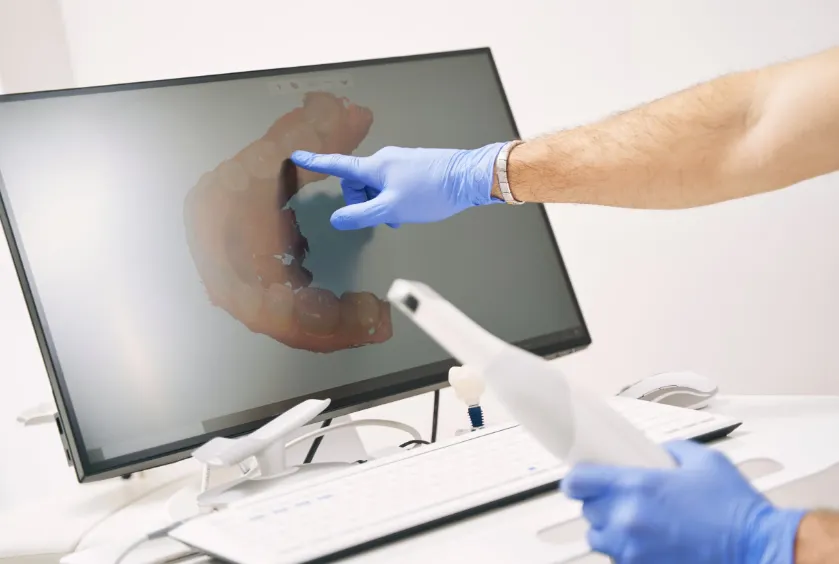
With digital impressions, your dentist uses a handheld scanner that captures thousands of images per second. Those images are stitched together by software to form a 3D model of your teeth and gums. You see it on the screen as it is being made. If an area is missing, it can be rescanned immediately. No re-mixing, no re-taking the entire impression.
This matters for accuracy because the computer model does not shrink, bubble, or distort the way physical materials can. A conventional impression can change shape slightly while it sets or while it is shipped to a lab. A stone model can chip or wear. In contrast, a digital file stays consistent. It can be copied, shared, and stored without losing detail.
There is also a growing body of research that confirms what many patients feel in the chair. In several clinical studies, digital impressions have shown comparable or better fit for crowns, improved patient comfort, and reduced gagging and anxiety. Some reviews have even tracked long term outcomes for implant restorations and found that digital workflows hold up very well over time. You can explore one such clinical review focused on digital impressions and restorations in this evidence based comparison of digital and traditional methods.
So what does this look like for you as a patient? Imagine you need a crown. Instead of biting into a tray, your dentist scans your tooth. The image appears in real time, and you both can see any cracks, wear, or gaps. The file goes straight to a lab or an in office milling machine. The result is a crown that is designed to match your bite and neighboring teeth with impressive precision. That can mean fewer adjustments when it is cemented, less time in the chair, and a tooth that feels natural more quickly.
Is the switch to digital impressions worth it for everyday care?
It is normal to wonder whether this is just “shiny new technology” or something that truly benefits you. The truth is that digital impressions are not just about comfort. They support a more accurate and efficient workflow from start to finish.
For example, when a practice uses digital impressions together with 3D printing, they can produce models, surgical guides, and temporary restorations with very high consistency. The American Dental Association has even published guidance on how dentists can safely and effectively integrate 3D printing and digital models into care, including accuracy expectations and quality checks. If you are curious about how this fits into modern dentistry, you can browse the ADA guide to 3D printing and digital workflows.
This kind of digital workflow supports a wide range of general dentistry services. Crowns, inlays, onlays, implant restorations, orthodontic aligners, night guards, and retainers can all start with a scan. When the starting point is more accurate, the final result is more likely to fit and function well.
To make this more concrete, it can help to see how digital dental scanning compares to traditional impressions on a few everyday points that patients care about.
How do digital impressions compare with traditional methods in daily life?
The table below highlights practical differences you might feel or notice when your general dentist uses a scanner instead of trays.
| Aspect | Traditional Impressions | Digital Impressions |
|---|---|---|
| Comfort during visit | Gagging, strong taste, pressure from trays, longer setting time | Light scanning wand, no impression material, usually quicker |
| Accuracy and fit | Can distort during setting or shipping, depends heavily on technique | High precision 3D model, less risk of distortion, easy to verify on screen |
| Need for remakes or repeats | More common if material tears or bubbles. May require full retake | Specific areas can be rescanned immediately. Often fewer remakes |
| Time until final restoration | Slower transfer to lab. Physical models must be shipped and poured | Instant digital transfer to lab or in office milling. Can shorten overall time |
| Record keeping | Physical models take space, can chip or be discarded | Digital files are easy to store, copy, and reuse for future treatment |
| Eco and material use | Uses trays, impression material, stone, and shipping materials | Reduces disposable materials and shipping needs |
Seeing these differences side by side, it becomes clearer why modern digital impression accuracy is becoming the standard for many general dentists. It supports both clinical quality and patient comfort.
Three practical steps you can take before your next dental visit
1. Ask directly about scanning and how your dentist uses it
Before committing to major work like a crown, bridge, or implant, ask if your general dentist uses digital impressions. If they do, ask which treatments they use it for. Crowns only, or also for aligners, night guards, and implant guides. A thoughtful dentist will be happy to explain how their scanner improves accuracy and what that means for your specific situation.
2. Talk about your past impression experiences
If you have a strong gag reflex, anxiety, or past problems with poorly fitting restorations, say so early. Share what went wrong before. For example, “My last crown needed several adjustments and still feels off.” This gives your dentist a chance to explain how digital impression technology might reduce those issues and to plan extra checks for your bite and comfort.
3. Clarify expectations for fit, adjustments, and follow up
Ask how often they need to remake restorations with their current process, and what happens if your new crown or appliance does not feel right. A practice that uses digital scanning and a modern workflow should have clear steps for minor adjustments, as well as a plan if anything needs to be redone. Knowing this ahead of time can ease a lot of worry.
Moving forward with more control and less stress
You do not have to be a dental expert to ask smart questions about your care. Understanding why digital impressions for general dentistry often provide better accuracy than traditional methods simply gives you more options. You can choose a dentist who uses tools that support precise, comfortable treatment, and you can speak up about what matters most to you.
Most of all, you deserve dental work that feels like it truly belongs in your mouth. With the right information and a general dentist who is willing to explain their approach, you can move from feeling anxious and uncertain to feeling informed and supported, one scan at a time.