

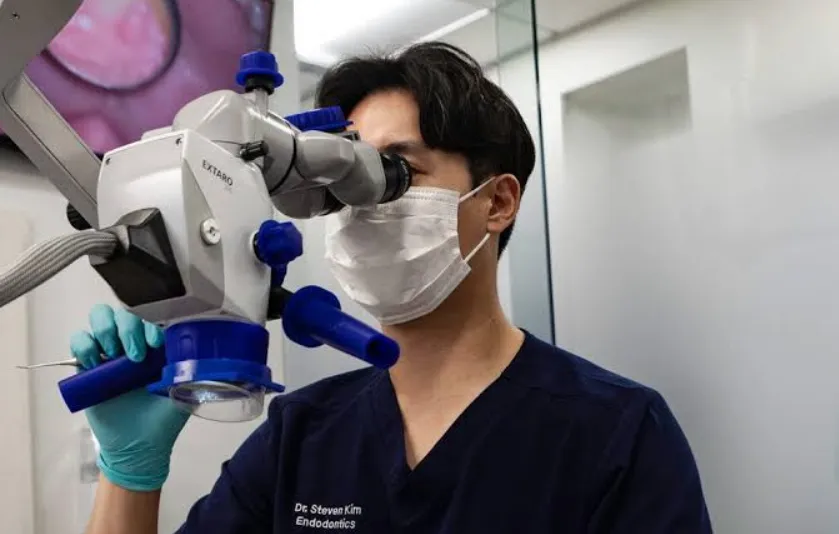
You might be here because a tooth that once just “twinged” now hurts when you chew, or keeps you up at night. Maybe your dentist mentioned a root canal and then added that an endodontist might use a microscope during treatment. That part may have sounded technical and a little frightening. You are already stressed about pain, time, and cost, and now there is new technology in the mix that you are expected to understand. At Antioch endodontics, we understand these concerns and are here to help.
If that is where you are, you are not alone. Many people only hear the words “root canal” and imagine a long, painful procedure. When you add “microscope assisted” to the description, it can feel like one more layer of complexity. You might be wondering if this is really necessary, or if someone is trying to “upgrade” you to something you do not need.
Here is the short version of what follows. Microscope assisted endodontics is not a gimmick. It is a way for an endodontist to see your tooth more clearly, work more precisely, and often save teeth that might otherwise be lost. It can increase accuracy, reduce complications, and improve healing. In other words, it is about giving your tooth the best possible chance.
Why does a root canal feel so stressful in the first place?
Before looking at the advantages of the operating microscope, it helps to name what you might already be feeling. A root canal touches three sensitive areas at once. Your body, your wallet, and your sense of control.
On the physical side, you might fear pain during or after the procedure. You may have heard stories from friends or family that made root canals sound awful. Emotionally, there is the fear of “what if this does not work” or “what if I lose the tooth anyway.” Financially, you might be worried about paying for treatment that feels uncertain.
Because of this tension, you might wonder. Is there a way to make this treatment more predictable, safer, and more efficient. That is exactly where microscope enhanced root canal treatment comes in.
What makes microscope assisted endodontics different?
Traditional root canal treatment relies heavily on what the dentist can see with the naked eye and with small dental loupes. The root canal system inside a tooth is tiny, complex, and often curved. According to research, many canals are only a fraction of a millimeter wide, and they can split, join, and hide behind calcified tissue. When you cannot see all of that clearly, it is easier to miss a canal, leave infected tissue behind, or accidentally damage the root.
An operating microscope changes that picture. It gives the endodontist strong magnification and focused light directly into the tooth. One study on the impact of microscopes in endodontics reported improved ability to locate and treat tiny canals, manage complications, and remove broken instruments more safely. You can read more about that in this clinical review on the role of the dental operating microscope in endodontics, available through the National Institutes of Health, which describes how magnification improves detection of fine structures and treatment quality in everyday practice here.
So, where does that leave you. It means that when a tooth is treated with a microscope, the clinician can see more, guess less, and work in a more controlled way.
Advantage 1. Better visibility means more precise and thorough cleaning
Imagine trying to clean out the inside of a narrow, twisting tube while looking at it from across the room. That is what traditional treatment can feel like when canals are tiny or hidden. With microscope assisted root canal therapy, the endodontist can bring that view “up close,” which helps in several ways.
Under high magnification, the clinician can identify extra canals, tiny cracks, unusual anatomy, or areas of calcification that might be invisible otherwise. Studies show that molars often have more canals than expected, and missing even one canal can increase the risk of treatment failure. When all canals are located and shaped correctly, infected tissue and bacteria are removed more completely, which supports better healing and reduces the chance of lingering pain.
A clinical paper on modern endodontic techniques explains that combining magnification with advanced cleaning methods improves disinfection of the root canal system and supports long term tooth survival. You can see this discussed in more detail in this review of contemporary root canal treatment outcomes here.
Advantage 2. Fewer complications and a higher chance of saving the tooth
During root canal treatment, there are several possible complications. A file might separate inside the canal. A perforation might occur if an instrument slips through the side of the root. A ledge might form that blocks access to the end of the canal. These events are stressful for both patient and clinician, and they can affect the long term success of treatment.
With a microscope, the endodontist can work in a more controlled way. The enhanced view helps guide instruments, verify canal shape, and monitor thin areas of dentin so they are not over prepared. If a complication does occur, such as a broken instrument, the microscope often makes it easier to locate and remove or safely bypass it, instead of giving up on the tooth.
Research on complex endodontic retreatments has found that using a microscope improves the ability to manage difficult cases and contributes to better outcomes compared with treatment without magnification. One study on retreatment and modern tools highlights how magnification supports removal of old materials and repair of previous damage, which in turn can help avoid extraction. That discussion is available through this open access article on advances in endodontic retreatment techniques here.
So if your tooth has a history of failed treatment, unusual anatomy, or deep decay, microscope guided endodontic therapy often gives it a second chance.
Advantage 3. More comfort, efficiency, and clarity for you
When you hear about magnification and equipment, you might picture a longer, more complicated visit. In reality, better visibility can make treatment smoother and more efficient. The endodontist spends less time guessing and more time doing exactly what is needed.
This can translate into shorter chair time in many cases, fewer appointments, and a lower chance that you will need retreatment later. Because the tooth is cleaned and sealed more precisely, post treatment discomfort may be milder and healing more predictable, although everyone heals at a different pace.
There is also another benefit that is easy to overlook. Communication. With a microscope, many endodontists use digital images or video to show you what they saw in your tooth. That can help you understand why treatment was recommended, what was done, and what to expect next. When you can see that a hidden canal was found or a crack was identified, it can reduce anxiety and increase trust.
How does microscope assisted endodontics compare with traditional treatment?
When you are deciding what to do, it can help to see the differences side by side. Every case is unique, and no tool guarantees success, yet the pattern is clear.
| Aspect | Traditional Root Canal | Microscope Assisted Endodontics |
|---|---|---|
| Visibility inside the tooth | Limited to the naked eye or small loupes. Tiny canals and cracks may be missed. | High magnification and focused light. Greater ability to see extra canals, fractures, and calcifications. |
| Cleaning and shaping | More reliance on experience and feel. Higher chance of leaving complex areas partially untreated. | Targeted cleaning of complex anatomy. Better access to hidden or curved canals, which supports more thorough disinfection. |
| Risk of complications | Greater risk of ledges, perforations, or undetected instrument separation, especially in complex roots. | Improved control and visualization. Complications can be reduced and are often easier to manage if they occur. |
| Suitability for difficult cases | May be limited for retreatment, calcified canals, or unusual anatomy. Extraction sometimes recommended earlier. | Well suited for complex or previously treated teeth. Higher chance of saving teeth that might otherwise be lost. |
| Long term outlook | Success can be good, yet is more variable when anatomy is complex or visibility is poor. | More predictable in challenging cases due to better detection, cleaning, and sealing of the canal system. |
What can you do right now to protect your tooth?
When you are in pain or facing a big decision, it helps to have clear, simple steps. You do not need to become an expert in endodontics. You just need to know what to ask and how to choose support that fits your needs.
1. Ask directly about magnification and technology
At your next appointment, ask your dentist or endodontist whether they use a dental operating microscope for root canal treatment. You can say something as simple as, “Will my root canal be done under a microscope or any special magnification, and how will that help in my case.” A thoughtful clinician will explain how their tools support accuracy and comfort for you. Their willingness to discuss this openly can tell you a lot about how they practice.
2. Share your fears and your priorities upfront
Before treatment begins, tell your endodontist what worries you most. It might be pain, cost, missing work, or the fear that the tooth will still hurt afterward. When your clinician understands your concerns, they can adjust the plan. That might mean breaking treatment into shorter visits, using extra numbing techniques, or explaining how microscope endodontic treatment can reduce the need for retreatment. Clear communication is part of your care, not an extra.
3. Weigh the cost against the value of keeping the tooth
It is fair to ask about fees and insurance coverage. At the same time, try to compare the investment in expert microscope guided treatment with the potential cost of losing the tooth. Extraction followed by an implant, bridge, or denture is often significantly more expensive and more time consuming. Keeping your natural tooth, when possible, usually supports better chewing, comfort, and bone health. If the cost feels heavy, ask about payment options, timing, or which tooth should be treated first if multiple teeth are involved.
Moving forward with more clarity and less fear
You did not choose this situation. Tooth pain, infection, and urgent dental decisions tend to show up at the worst possible time. Yet you do have choices in how your tooth is treated and what kind of support you receive.
Microscope assisted endodontics is about giving your tooth every reasonable advantage. Better vision. More precise treatment. A stronger chance of healing well. When you combine that technology with an endodontist who listens to you, explains your options, and respects your concerns, you are no longer just “getting a root canal.” You are making a thoughtful decision about your health.
You deserve relief from pain, and you deserve care that feels careful, modern, and human. Your next step can be as simple as reaching out to an endodontist, asking whether they use a microscope, and having an honest conversation about what that means for your specific tooth. From there, you can move ahead with more confidence and less fear, knowing you have done what you can to protect your smile.