

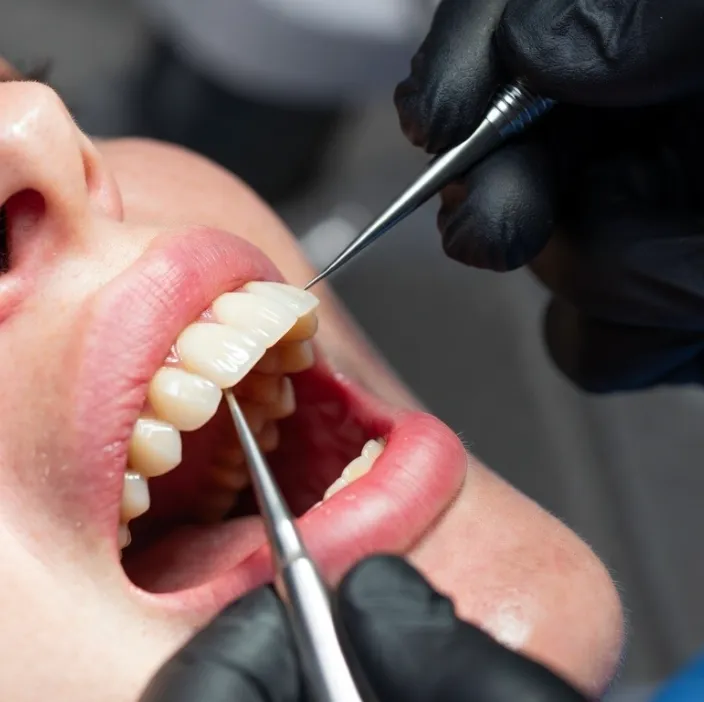
You might be feeling caught between two strong but opposite wishes. On one hand, you want a nicer smile that feels natural and confident in photos, at work, or when you are with your kids, and you’d like help from a family dentist in Plainville, MA. On the other hand, the idea of “drilling down” healthy teeth or going through a big cosmetic procedure makes your stomach tighten a bit.end
Maybe you have seen dramatic veneer makeovers online and thought, “That looks great, but do they really have to shave that much tooth?” Or you have heard friends talk about sensitivity after cosmetic work and thought, “I cannot handle that with everything else on my plate.” Because of this tension, you might be wondering if there is any middle ground at all.
That is where minimal prep options in family cosmetic offices come in. These are treatments that aim to enhance your smile while preserving as much natural tooth as possible. They are popular because they respect your teeth, your time, and your fears. In simple terms, they try to give you a “before and after” without the heavy cost to your comfort or long term dental health.
So, where does that leave you if you are trying to decide whether this type of cosmetic care makes sense for you and your family? It helps to understand what the tradeoffs really are, and why so many people are choosing more conservative cosmetic dentistry today.
Why does cosmetic dentistry feel so stressful for families?
For many people, it started with a small annoyance. Maybe one front tooth is chipped, a few teeth are slightly crooked, or your teenager’s front teeth are stained from old braces. On its own, it seems minor. Yet every time you see a photo or catch your reflection, your eye goes straight to it.
Then comes the spiral of questions. “Do I really need veneers for this?” “What if they drill my teeth and I regret it?” “How much will it cost if more than one family member needs treatment?” This is where the stress builds. You want to fix what is bothering you, but you do not want to cause new problems along the way.
Traditional porcelain veneers, for example, often require removing a noticeable amount of enamel so the veneer will sit flush and look natural. According to patient resources from the American Dental Association, veneers can create a very natural looking smile, but they are not reversible because some enamel is usually removed. You can see a helpful overview of what veneers involve in this ADA patient guide on veneers.
Because of this, many families hesitate. They sit in the “not happy, but not acting” zone. Teeth are still chipped, stained, or uneven, but fear of permanent change keeps them from moving forward.
What makes minimal prep cosmetic options different?
Minimal prep treatments aim to respect your natural tooth structure as much as possible. This can include ultra thin porcelain veneers, no prep veneers in carefully chosen cases, and bonded composite treatments that only alter the parts of the tooth that truly need it.
Research in conservative dentistry has been moving in this direction for years. Many dentists now talk about “ultra conservative” or “additive” approaches, where the dentist adds material to the tooth rather than shaving it down. For example, clinical studies on modern ceramic and bonded restorations show that strong bonding methods can allow much smaller preparations while still being durable for everyday chewing and speaking. You can see examples of this thinking in scientific reviews of conservative ceramic restorations such as this study on minimally invasive ceramic restorations.
So why are minimal preparation veneers and cosmetic options becoming so popular in family offices in particular?
Because a family and cosmetic dentist often has to think about everyone under one roof. That might mean a parent with old fillings, a teen with front tooth damage from sports, or a grandparent with thinner enamel. The more conservative the approach, the easier it is to find solutions that fit different ages and dental histories without over treating anyone.
What if you do nothing, go traditional, or choose minimal prep?
To make this more concrete, imagine three paths for someone who is unhappy with their front teeth.
First, they could do nothing. They save money in the short term, but they keep feeling self conscious. They might avoid smiling fully in photos or hold back in social settings. Small chips or cracks might also grow over time.
Second, they could choose traditional veneering with more extensive tooth reduction. The result can look beautiful and even life changing, though it usually involves more enamel removal, higher costs, and the understanding that veneers will need replacement at some point.
Third, they could choose minimal prep cosmetic dentistry. The dentist removes as little enamel as possible and uses modern ceramics or composites to reshape, brighten, or repair. The result might be slightly less “instant Hollywood” but often more natural and much gentler on the teeth.
Because so many families are juggling budgets, long term health, and appearance, that third path often feels like the most balanced one.
How do minimal prep options compare in real life?
The table below gives a simple comparison of traditional veneers and common minimal prep options in a family cosmetic setting. These are general patterns, not promises, because every mouth is different.
| Treatment type | Tooth reduction | Sensitivity risk | Typical longevity | Best suited for |
|---|---|---|---|---|
| Traditional porcelain veneers | Moderate removal of enamel on the front of teeth | Higher, especially short term after treatment | Often 10 to 15 years with good care | Major color change, significant reshaping |
| Minimal prep porcelain veneers | Very small enamel removal, sometimes only polishing | Lower, due to more enamel preservation | Often 10 years or more in suitable cases | Mild to moderate cosmetic concerns on relatively aligned teeth |
| Bonded composite bonding | Usually no or very little enamel removal | Low, since most of the tooth stays intact | Often 5 to 7 years, sometimes longer with touch ups | Small chips, gaps, shape corrections, single tooth issues |
Studies on bonded composites and conservative veneers show that when they are carefully planned, they can last many years, especially in patients who care for their teeth and attend regular checkups. For example, research on adhesive dentistry has found that careful bonding and minimal removal of tooth structure can keep teeth stronger over time than older cutting techniques that removed larger amounts of enamel and dentin. You can see an example of this trend toward adhesive, conservative approaches in this scientific review of adhesive restorations.
So, where does that leave you when you are sitting in the chair trying to decide what to do? It comes down to matching your goals with the least amount of change your teeth actually need.
Three practical steps before you choose a family and cosmetic dentist
1. Get clear on what really bothers you
Instead of saying “I hate my smile,” try to list specific things. For example, “These two teeth are darker,” “This edge is chipped,” or “This gap shows in photos.” This helps a family and cosmetic dentist focus on targeted, minimal changes rather than a full smile overhaul you may not need.
Bring photos of how your teeth used to look, or examples of smiles you like that feel realistic for you. The clearer you are, the more conservative your treatment plan can be.
2. Ask directly about minimal prep and additive options
During your consultation, use clear questions like:
“Is there a way to improve this by adding material instead of removing a lot of enamel?”
“Would minimal prep veneers, bonding, or another conservative treatment work in my case?”
“If we do need to remove enamel, how much and why?”
A thoughtful dentist will walk you through photos, mock ups, or digital previews and explain when minimal prep options in cosmetic dentistry are appropriate and when they are not, so you can make a choice that feels honest and informed.
3. Weigh short term wow against long term comfort
A dramatic instant change can be tempting, especially if you have lived with smile insecurities for years. Before you decide, ask yourself a few grounding questions.
- “Will I still feel good about this treatment in 10 years if it means I removed more enamel than necessary?”
- “How important is it to me to keep my teeth as natural as possible, especially as I age?”
- “If my child or teen were getting this done, what level of tooth reduction would feel acceptable?”
Answering these honestly can point you toward a path that respects both your appearance and your long term comfort.
Finding peace with your choice about minimal prep cosmetic care
You do not have to choose between doing nothing and going through aggressive cosmetic treatment. Many families are finding that thoughtful, minimal prep options help them feel proud of their smiles without feeling like they traded away too much of their natural teeth.
The most important thing is that you feel heard, that your dentist explains your options in plain language, and that you do not feel rushed into anything. When you understand what is possible with conservative treatments, you can move forward with more confidence and less worry, knowing you are caring for both your smile today and your teeth for the long haul.
Your next step does not have to be big. Even a simple conversation with a trusted family and cosmetic dentist about conservative choices can be enough to ease your mind and point you in the right direction.